Painter guide
Does exterior paint colour affect how hot your Brisbane home gets?
Yes, Colour Really Does Make a Difference
Exterior paint colour affects how hot your Brisbane home gets, and the effect is measurable, not just anecdotal. Dark colours absorb more solar radiation than light ones, which means the surface underneath gets hotter, and that heat works its way into your living spaces. In a city that regularly records summer temperatures above 30°C, and where western-facing walls cop afternoon sun for hours, this matters more than it would in, say, Melbourne.
That said, colour is only one piece of the puzzle. Insulation, eaves depth, window glazing, and roof type all play a role. Understanding where paint colour fits in that picture helps you make a smarter decision when it is time for a repaint.
The Science Behind It (Kept Simple)
Every surface either absorbs or reflects solar energy. Physicists measure this as Solar Reflectance Index (SRI) - a scale from 0 (absorbs everything) to 100+ (reflects almost everything). Standard white sits around 80-90 on that scale. A deep charcoal or heritage dark green can sit below 10.
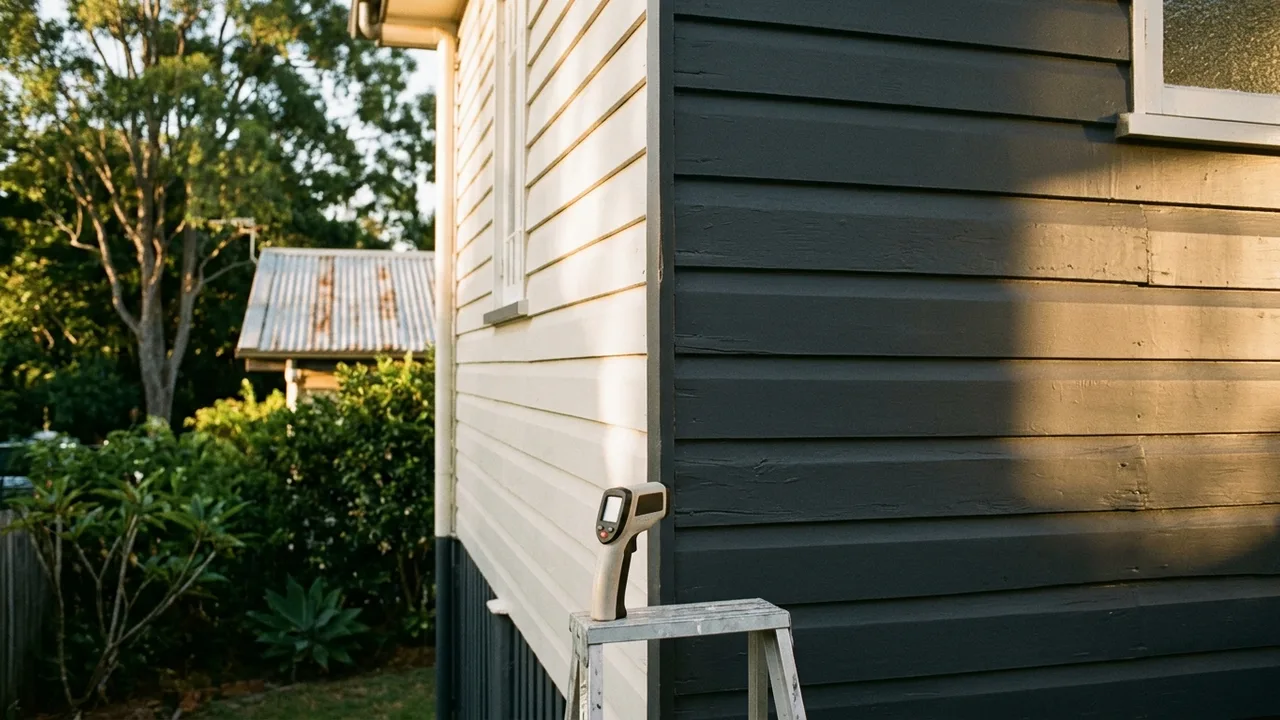
The practical outcome: a dark exterior wall in Brisbane summer can reach surface temperatures of 60-70°C or higher on a north- or west-facing aspect. A comparable wall in a light colour might sit 20-30°C cooler. That temperature gap matters because heat transfers inward through the wall over time, a process called thermal mass conduction. Brick walls do this more slowly than weatherboard, but both do it.
Brisbane's climate classification is humid subtropical (Köppen Cfa), which means high humidity slows the rate at which your home cools back down at night. A dark wall that stores heat during the day releases it into the evening, which is exactly when you want your home to be comfortable.
How Much Does It Actually Affect Indoor Temperature?
This is where honest answers get harder, because the variables stack up quickly.
If you have a well-insulated ceiling, the paint colour on your walls contributes less to indoor temperature than the roof surface above you. Ceiling insulation is typically the biggest single factor in keeping a Brisbane home cool. But many homes in suburbs like Belmont, Wishart, and Mount Gravatt East are older timber or brick homes that were built before bulk insulation was standard. In those homes, wall colour carries more weight.
A rough way to think about it: in a poorly insulated home, switching from a very dark exterior to a light cream or off-white could reduce the peak indoor temperature by a couple of degrees on a hot day. That does not sound dramatic, but when your air conditioner is already working hard at 36°C, reducing the thermal load on the walls can translate to lower running costs and a more comfortable evening.
In a well-insulated home with decent eaves, the difference will be smaller - maybe negligible on the walls, but still relevant on the roof surface (more on that below).
Roof Colour Is the Bigger Lever
If you are thinking about colour and heat, the roof surface matters more than the walls. The roof is the largest horizontal surface exposed to direct overhead sun, especially between October and March in Brisbane. A dark colorbond or terracotta tile roof absorbs significantly more energy than a light grey or off-white one.
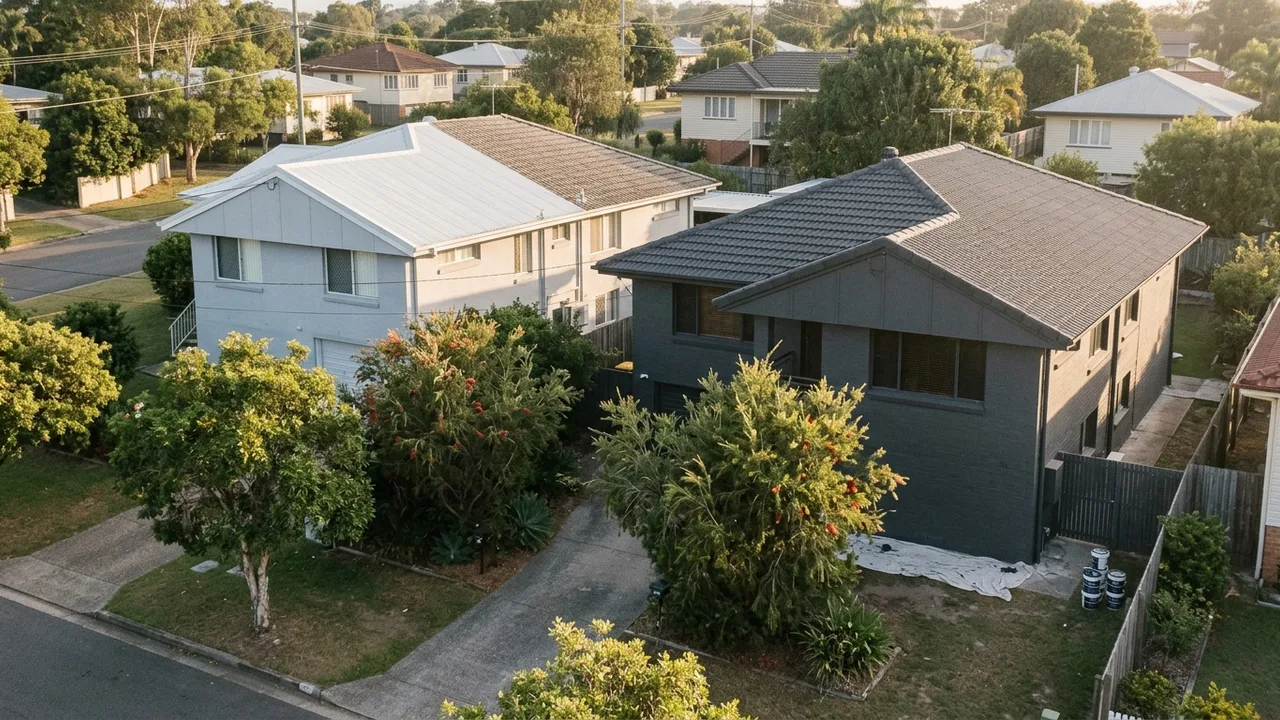
Roof painting is a practical option for many Brisbane homes with tiled or metal roofs. A quality repaint with a lighter colour and a paint formulated with higher reflectance pigments can make a genuine difference to what happens in the ceiling cavity. Cooler roof surface means a cooler ceiling space, which reduces the load on ceiling insulation and, by extension, the rooms below.
This is especially relevant in the Outer East Brisbane suburbs - Carindale, Rochedale, Wakerley - where newer single-storey brick homes often have large roof planes with relatively modest eave overhangs. There is a lot of roof catching a lot of sun.
One practical note: if you are considering a roof repaint primarily for heat reasons, ask the painter about the specific product's SRI rating. Not all light colours are equal; pigment chemistry plays a role, and some products are specifically formulated for thermal performance.
Walls: Light vs Dark, and the Trade-offs Worth Knowing
Choosing a lighter exterior colour for thermal reasons is not always straightforward. Here are the genuine trade-offs:
- Lighter colours show dirt faster. In suburbs near parks or with heavy tree cover - Holland Park, Wishart, and areas of Carina come to mind - airborne dust, mould, and organic staining become more visible on off-white walls. You may clean or repaint more often.
- Dark colours can look better on certain home styles. A Queenslander with dark charcoal trim and a deep toned wall can look striking and appropriate to the style. Forcing it into a pale cream for thermal reasons might not suit the architecture.
- Mid-tones are a reasonable compromise. Warm greys, pale terracottas, and soft sage greens sit in a middle range that reflects more than deep tones but avoids the maintenance visibility of bright white.
- Orientation matters. A dark colour on a south-facing wall (which gets little direct sun in Brisbane) has far less thermal impact than the same colour on a north or west face. If you love a deep tone, consider using it selectively on aspects that do not cop full sun.
- Paint sheen affects reflectance slightly. Higher-sheen finishes reflect a little more than flat finishes in the same colour. It is a minor factor, but worth knowing.
What About the Cost Side?
A full exterior repaint in Brisbane typically costs somewhere between $3,000 and $8,000 for a standard detached home, depending on size, surface condition, and access difficulty. That range holds roughly true across the suburbs we work in - Mansfield, Upper Mount Gravatt, Holland Park West, and surrounds.
Changing colour as part of a repaint you were already planning costs very little extra. You are paying for labour and prep regardless; the colour choice itself might add a small amount for extra primer or an extra coat if going from very dark to very light (or the reverse), but it is not a major additional expense.
If you are repainting specifically to reduce heat, weigh the thermal benefit against the cost of the job on its own merits. Paint alone will not substitute for ceiling insulation, appropriate eaves, or good window management. It is a useful contribution, not a complete solution.
Roof painting, separately, typically runs $1,500 to $4,000 for a standard home, depending on roof area and condition. If thermal performance is your primary goal, the roof is where the money is better spent relative to walls.
A Practical Recommendation
If you are planning an exterior repaint anyway, choosing a lighter colour palette costs you almost nothing extra and delivers a genuine, modest thermal benefit - particularly if you have older walls with limited insulation behind them. It is a sensible default for Brisbane's climate.
If thermal performance is a strong priority, look at the roof first. A roof repaint in a lighter, high-SRI product addresses the biggest solar load on your home and complements whatever you do with the walls.
Neither decision requires overcomplicating things. Look at your home's orientation, note which walls get the most afternoon sun, and let that guide where you put your effort. A painter who works regularly in your suburb will have a practical sense of what colours perform well in local conditions and what products are worth specifying.
If you want to talk through options for a repaint in Belmont or the surrounding suburbs, we can connect you with a local painter who does this work regularly. There is no obligation; it is just a conversation to help you get the scope and colour direction right before you commit.
Quick answers