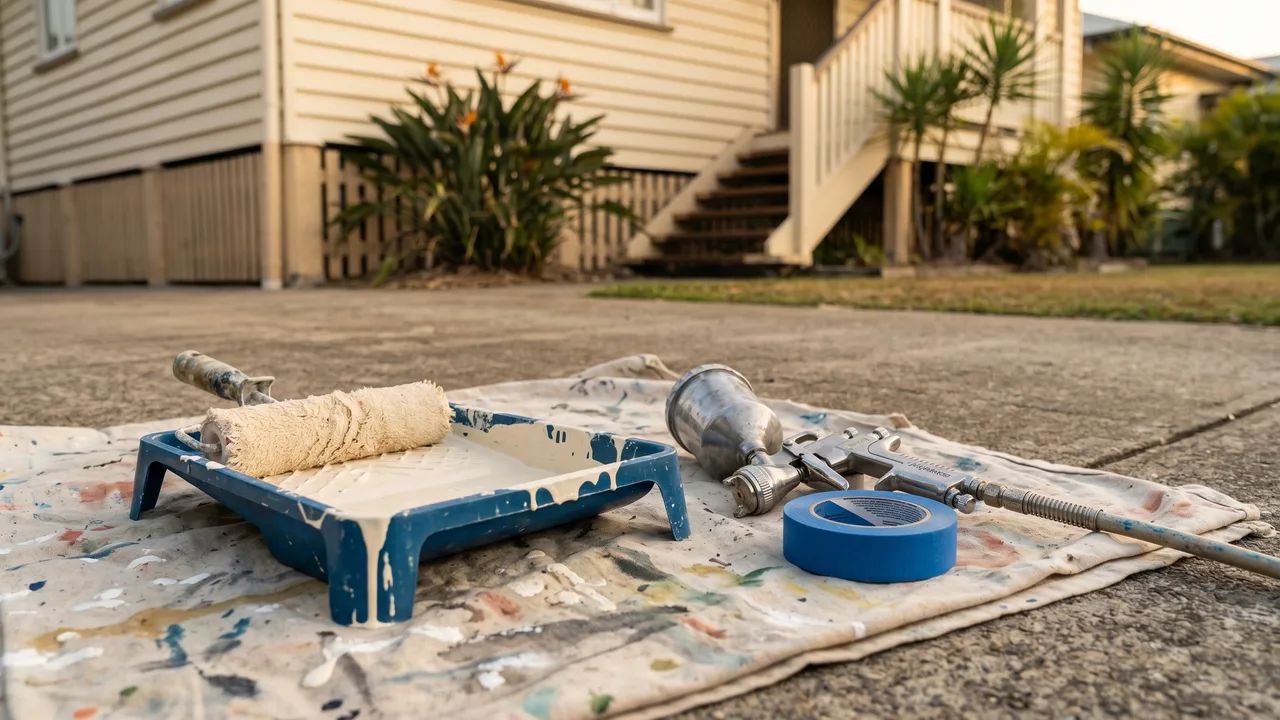
Painter guide
Should you paint your own house or hire a professional in Brisbane?
Should You Paint Your Own House or Hire a Professional in Brisbane?
For a small room with good surfaces, DIY painting is completely doable. For most full house repaints in Brisbane, especially on timber or rendered exteriors, the honest answer is that professional results are hard to replicate without the right prep skills and equipment. Here is how to think through the decision properly.
What Kind of Job Are You Actually Looking At?
Before you buy a drop sheet, be clear about the scope. There is a big difference between repainting one bedroom and repainting the full exterior of a brick-veneer home in Wishart or a high-set timber home in Mount Gravatt.
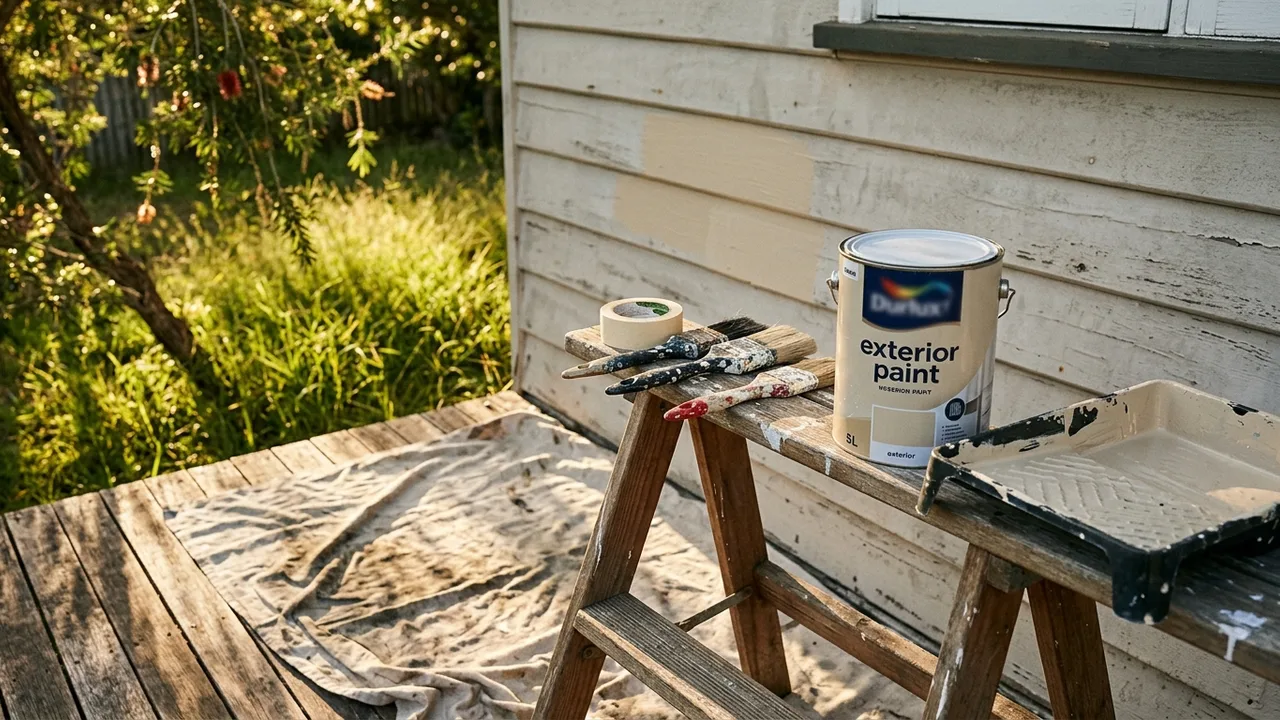
A single interior room might take a competent DIYer a weekend and $150-$300 in materials. A full exterior repaint on a typical Brisbane home, including walls, fascias, gutters and fences, is a different project entirely. It often requires pressure washing, crack repairs, primer coats, two finish coats, and work at height. Professional jobs like that typically run $3,500-$9,000 in this part of Brisbane, depending on the size and condition of the home.
Ask yourself a few questions upfront:
- Is the surface in good condition, or are there peeling, cracking, or mould issues?
- Is there any work at height beyond a standard step ladder?
- Is this a sale preparation, rental refresh, or long-term repaint you want to last a decade?
- Do you have a full weekend or two free, plus the physical capacity for the job?
Your honest answers to those questions will do most of the work.
The Real Cost of DIY: Materials, Time and Mistakes
People often underestimate DIY painting costs because they only count the paint. A realistic materials list for a full interior repaint includes primer, undercoat, two finish coats of quality acrylic, painter's tape, drop sheets, brushes, rollers, roller sleeves, a roller frame, a paint tray, gap filler, sandpaper, and sugar soap. For a four-bedroom home, that materials cost alone can reach $600-$1,200 if you use decent products.
Then there is your time. A professional painter with a labourer can repaint the interior of a standard Brisbane home in three to five days. For a solo DIYer doing evenings and weekends, the same job often takes three to six weeks. That is six weekends of disruption. For some people that trade is worth it. For others, it quietly is not.
The hidden cost is mistakes. Holidays in the paint film, visible roller lines, brush marks on trim, paint on your tiles, and uneven edges around cornice all add up. Fixing those after the fact can actually cost more than getting it right the first time.
Where Brisbane Conditions Change the Calculation
Brisbane's climate is genuinely harder on painted surfaces than most southern Australian cities. The combination of high UV, subtropical humidity, and warm wet summers accelerates paint breakdown, especially on north-facing elevations and unshaded roofs.
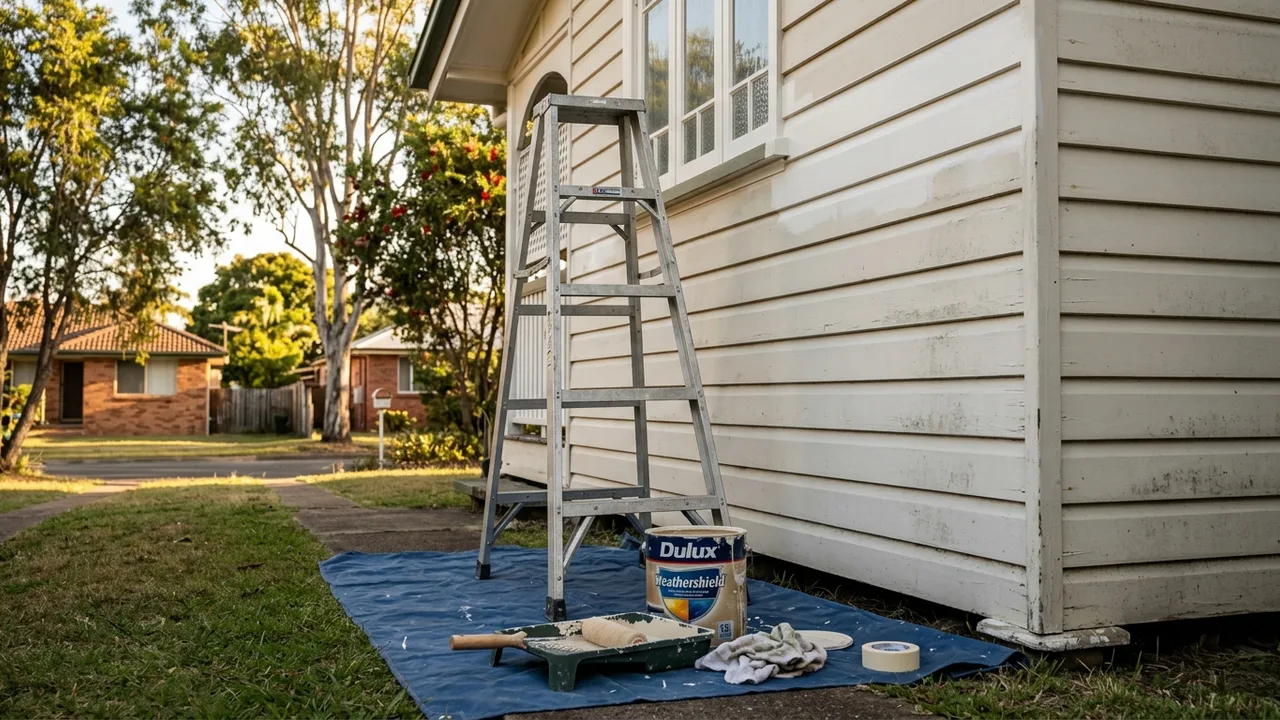
In the suburbs around Carindale, Upper Mount Gravatt, and Rochedale, homes tend to be brick veneer or rendered block. Rendered surfaces need careful prep: any existing cracks should be filled with a flexible filler before painting, otherwise they reopen within a season or two. Getting that prep right is where a lot of DIY jobs fall short.
If you are in Wakerley or Belmont, which are closer to Moreton Bay, the salt-air exposure is mild but still worth factoring into your choice of paint system. A professional who knows the area will typically specify a higher-build exterior product than the standard paint centre recommendation.
Timber homes are a separate chapter. High-set Queenslanders, even modified versions in Holland Park or Carina, require different prep again: scraping any loose paint back to a firm edge, treating any bare timber with a wood primer, and using a flexible acrylic topcoat. Skipping any of those steps shortens the repaint cycle significantly. Timber exteriors done well can last eight to twelve years. Done poorly, you are looking at four to six.
Mould is also a real issue. Brisbane's summer humidity means mould on ceilings and south-facing walls is common. Painting over active mould without treating it first is one of the most common DIY errors. A bleach wash and proper drying time is not optional; it is the difference between the job lasting two years or ten.
What a Professional Actually Brings (Beyond Paint)
A licensed painter brings more than brush skills. The main practical advantages are:
- Surface prep knowledge. Knowing what filler to use on a cracked render vs. a timber gap vs. a plasterboard joint, and which primer locks down old paint before a new colour.
- Height safety. Work above two metres requires correct scaffolding or elevated work platforms under Queensland workplace safety rules. Most professional painters have the equipment and training; most homeowners do not.
- Product selection. Trade paint ranges (Dulux Weathershield, Haymes Solashield, and similar) perform better than the standard retail equivalents. Tradespeople also buy at significant discount and typically supply paint as part of the quote, with correct product selection built in.
- Speed and finish quality. Two coats, consistent film thickness, clean edges, no lap marks. That consistency is genuinely hard to achieve without volume experience.
- Warranty. Reputable painters offer a workmanship warranty, typically two to five years. That matters when you find a peeling edge eighteen months later.
None of that means you cannot get a good result yourself. It means you need to honestly assess whether you have the skills, tools, and time to match it.
When DIY Makes Sense and When It Probably Does Not
DIY is a reasonable choice when:
- You are repainting one or two interior rooms in good condition
- The surfaces are flat, accessible, and free of mould or significant cracking
- You have done it before and know your way around a roller frame
- Budget is genuinely tight and time is not
Hiring a professional makes more sense when:
- Any exterior work is involved, particularly at height
- The home is timber, rendered, or showing signs of paint failure
- You are preparing the home for sale or lease and finish quality matters
- You want the job to last a full repaint cycle (eight-plus years) without touching it again
- You are dealing with mould, efflorescence on brick, or old oil-based paint under a water-based system
One more thing worth mentioning: if your home was built before 1980, there is a reasonable chance the existing paint contains lead. Sanding or scraping lead paint without proper containment is a genuine health risk. A professional painter knows how to handle it; most homeowners do not.
A Practical Way to Think About the Decision
If you are still on the fence, try pricing both options properly before deciding. Get a materials quote by walking through the job systematically: every room, every surface, every product you will need. Then get one or two quotes from local painters and compare the real gap.
In many cases, the gap between a careful DIY job and a professional quote is smaller than people expect, once you account for materials, equipment hire, and your own time at a realistic hourly rate. In others, the saving is real and worth taking.
What you should not do is start a professional-scale job with a DIY budget and a weekend mindset. Half-finished repaints, or repaints done over poor prep, almost always cost more to fix than they saved.
If you are in Belmont, Carina, Mansfield, Mount Gravatt or the surrounding suburbs and you are leaning toward getting a professional quote, a local painter who knows the specific surface types and climate conditions in the area will give you a more accurate read on what the job actually needs. That first conversation costs nothing, and it will tell you a lot.
Quick answers