Painter guide
How often does a Brisbane home exterior actually need repainting?
The short answer: every 8 to 12 years, usually
For most Brisbane homes, the exterior needs a full repaint somewhere between 8 and 12 years after the last coat. That is the honest middle of the range. But the actual number for your house could sit anywhere from 5 years to 15, depending on substrate, paint quality, aspect, and what the local environment throws at it. The sections below walk through each factor so you can make a realistic call on your own place.
Why Brisbane's climate shortens paint life compared to cooler cities
Paint degrades through UV exposure, heat cycling, moisture and physical abrasion. Brisbane delivers all four in quantity.
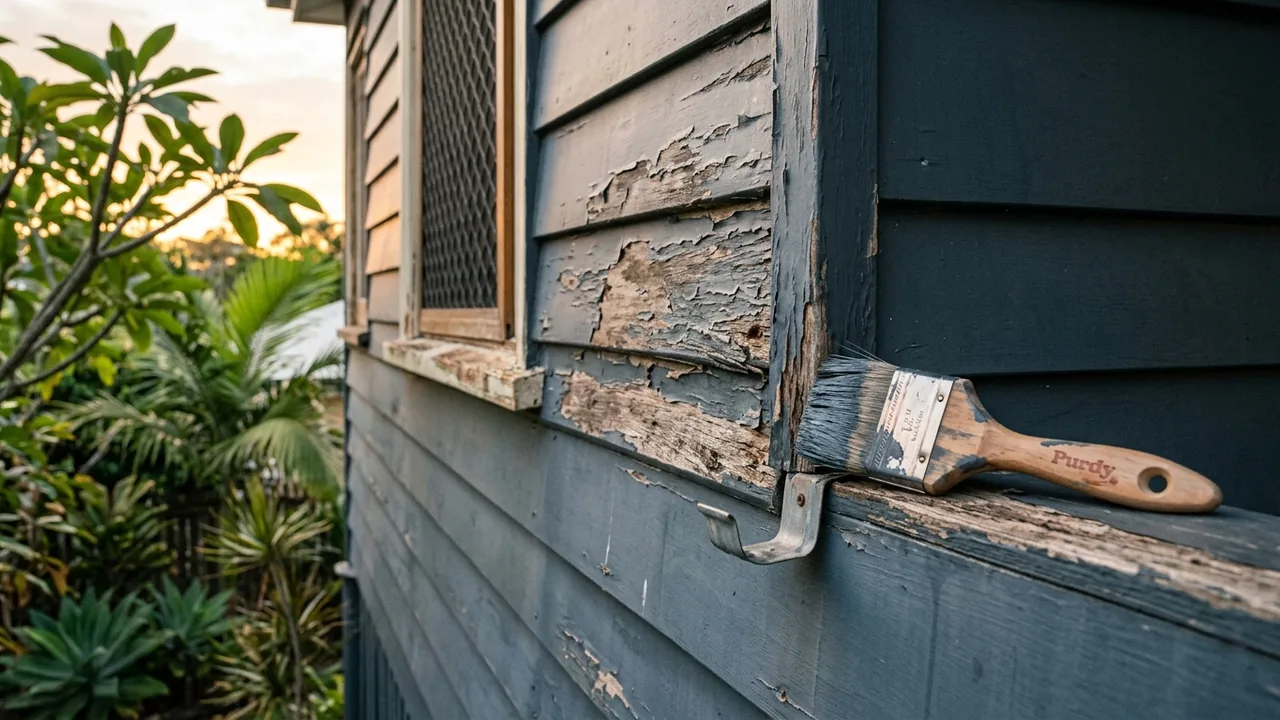
The subtropical sun here is intense, especially on north and west-facing walls. UV breaks down the binder in paint film, causing chalking (that powdery residue you can wipe off with a finger) and eventual cracking. On a wall that cops full afternoon sun in Belmont or Upper Mount Gravatt, you might see visible fading within five or six years, even with a quality acrylic.
Heat cycling is the other pressure. Surfaces heat up to 60 degrees or more on a summer afternoon, then cool overnight. That expansion and contraction works paint loose over time, particularly around window frames, trim joins and anywhere the surface changes material.
Humidity and the wet season add moisture ingress. If the paint film has any micro-cracks by the time the summer rains arrive, water gets under the coating and the cycle accelerates. You will often see this as bubbling or peeling on the lower sections of walls, or around south-facing eaves that dry out slowly.
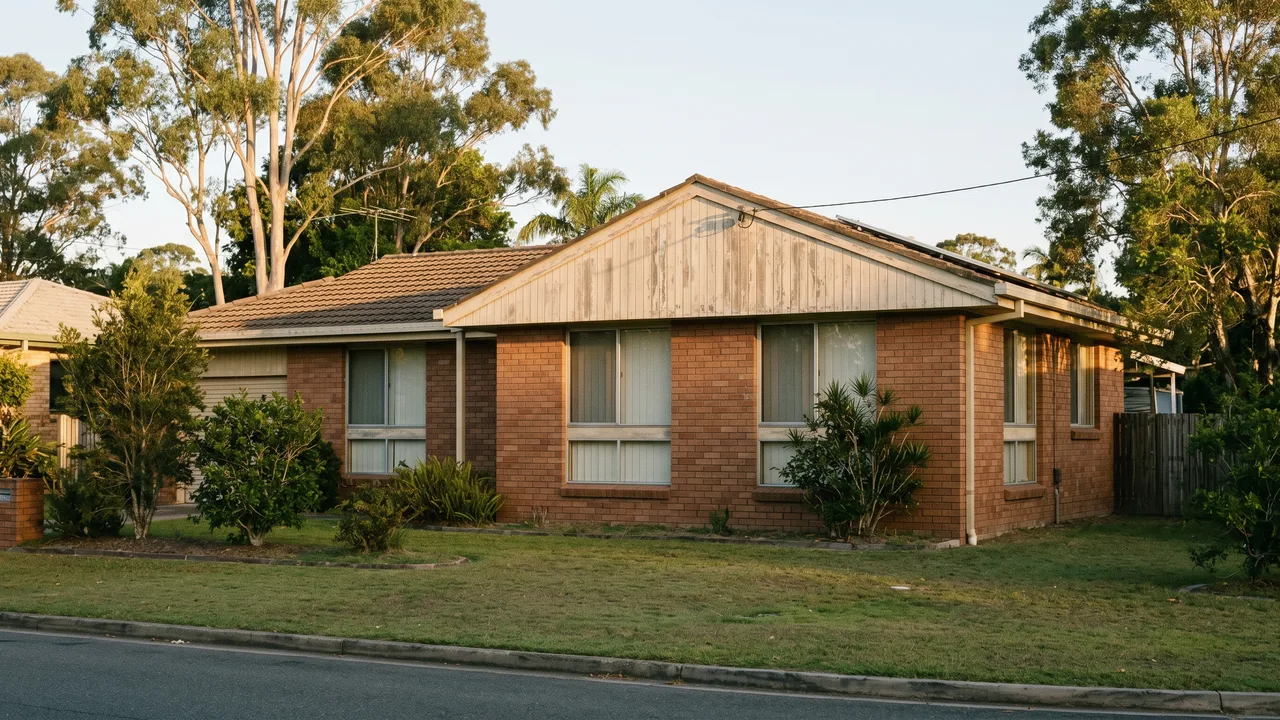
One point worth making about the Outer East suburbs specifically: homes in Carindale, Wishart and Rochedale sit further from the bay than, say, Wynnum or Manly, so salt air is not a significant factor. That removes one accelerant. The bigger concern here is tree proximity. Jacaranda and poinciana canopy is heavy through parts of Holland Park and Mount Gravatt East, and the combination of leaf debris, moisture retention and lichen growth on shaded walls can knock years off a paint job.
Substrate matters more than most people realise
The material under the paint affects how long the paint lasts and how hard the prep will be next time.
Hardiplank or fibre cement is common on post-1990 homes in this cluster. It accepts paint well, holds it reasonably and is dimensionally stable, so cracking from movement is less of an issue. Expect the upper end of the 8-12 year range if the prep was done properly first time.
Timber weatherboard, including the old hardwood on Queenslanders, is more demanding. Timber moves with moisture and temperature. Paint on timber typically shows stress earlier, especially on horizontal surfaces and anywhere the timber has end grain exposed. Repainting cycles of 7 to 10 years are realistic for timber exteriors in Brisbane. The silver lining is that a well-prepared timber surface that is sanded, primed and painted properly can look exceptional, and the substrate itself lasts generations if it is kept coated and moisture is kept out.
Brick and render is fairly common in the Mount Gravatt and Mansfield areas. Painted brick generally holds coating well, but efflorescence (white salt deposits) and render cracks need to be dealt with at prep stage. A skipped crack repair will reappear within a year.
The paint product itself: trade-offs between cost and longevity
Not all exterior paints are created equal, and the gap between a $60-per-10-litre product and a $120-per-10-litre product often shows up clearly at year seven or eight.
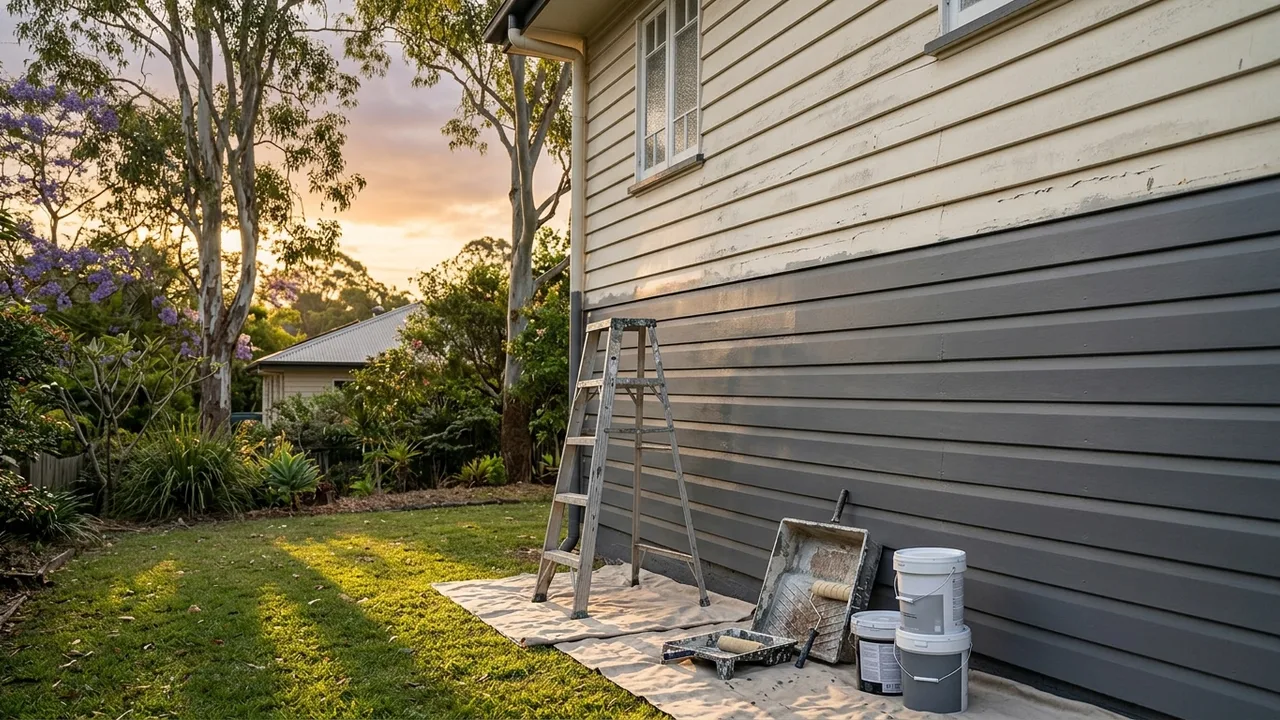
Premium acrylic exterior paints, particularly those formulated for high-UV environments, carry genuine performance advantages. Better pigment loading means colour retention lasts longer. Higher-quality binder means the film stays flexible and resistant to cracking. Some products include mould inhibitors, which is relevant for shaded walls.
The trade-off is straightforward: a higher-spec product costs more at the time of painting, but if it extends the repaint cycle by two or three years on a house that costs $4,000 to $8,000 to paint, that is meaningful value. On a $1,500 fence-and-fascia job, the product upgrade matters less.
One thing to watch: if a painter quotes unusually low, ask what product they are pricing. Budget paint on good prep will still look ordinary by year five.
Signs your exterior actually needs attention now (not in two years)
Sticking to an arbitrary schedule is less useful than knowing what to look for. Walk around your house and check for these:
- Chalking on walls, especially south and east faces. Run your finger across the surface. If it comes away with a fine powder, the binder has degraded and the paint is no longer protecting effectively.
- Cracking or checking. Fine hairline cracks are early warning. Wide or deep cracks, or cracks that follow the render joins, mean water is already getting in somewhere.
- Bubbling or peeling. This almost always means moisture under the film. The source needs to be identified (often a gutter or flashing issue) before repainting, otherwise the new coat will bubble too.
- Colour fade to the point where it looks patchy or uneven. Some fading is cosmetic, but uneven fading often means the film thickness is inconsistent and parts of the surface are exposed.
- Timber rot in window sills or fascias. This is a structural repair first, then a paint job.
If you can see two or more of these, the repaint timeline is now, not deferred.
DIY versus getting a painter in: an honest comparison
A litre of quality exterior acrylic costs around $10 to $14 per litre at a trade paint supplier. The materials for a typical suburban house might run $800 to $1,500. So why does a professional job cost $4,000 to $8,000 or more?
Preparation. It is almost always the preparation. Scraping, filling, sanding, priming and masking is the bulk of the labour on a professional job, and it is also the part that determines how long the new coat lasts. A competent painter doing proper prep on a two-storey Carindale home might spend two full days on surface work before a brush touches fresh paint.
DIY is viable for someone who is comfortable at height, has time to prep properly and is painting a relatively straightforward surface. A single-storey home on flat ground with good existing paint underneath, minor surface wear and no major cracks is a reasonable DIY candidate for an experienced person.
Where DIY tends to go wrong: skipping primer on bare patches, not cutting out failing paint before overcoating, rushing the prep to get to the "visible" part of the job. The result looks fine for 18 months, then starts to peel from exactly those spots.
For two-storey homes, homes with significant timber components, or any exterior with notable cracking and peeling, a professional result will typically outlast a DIY result by several years, which usually justifies the cost difference on a per-year basis.
A practical recommendation
If your exterior paint is under six years old and looks structurally intact, you can reasonably wait and just keep an eye on it. Clean off any lichen or mould growth with a diluted bleach solution and a soft brush, clear gutters so water is not running down walls and check caulking around windows annually.
If you are between six and ten years out from the last repaint, do a proper inspection as described above. Look at north and west faces first, then check the timber components carefully. If you are seeing early chalking and minor cracking but no bubbling or rot, you have some time but you are in the planning window, not the ignore-it window.
Past ten years, the honest answer is that you are probably overdue whether or not it looks obviously bad. Paint that looks "alright" at ten years is often failing at a microscopic level, and by the time it looks obviously bad you have already allowed moisture to start working on the substrate.
Getting a quote costs nothing and gives you a concrete picture of what the job entails. If you are in Belmont, Carindale, Wishart, Holland Park or any of the surrounding suburbs and you want an independent view on what your exterior actually needs, we can connect you with a local painter who will give you a straight assessment rather than a sales pitch.
Quick answers