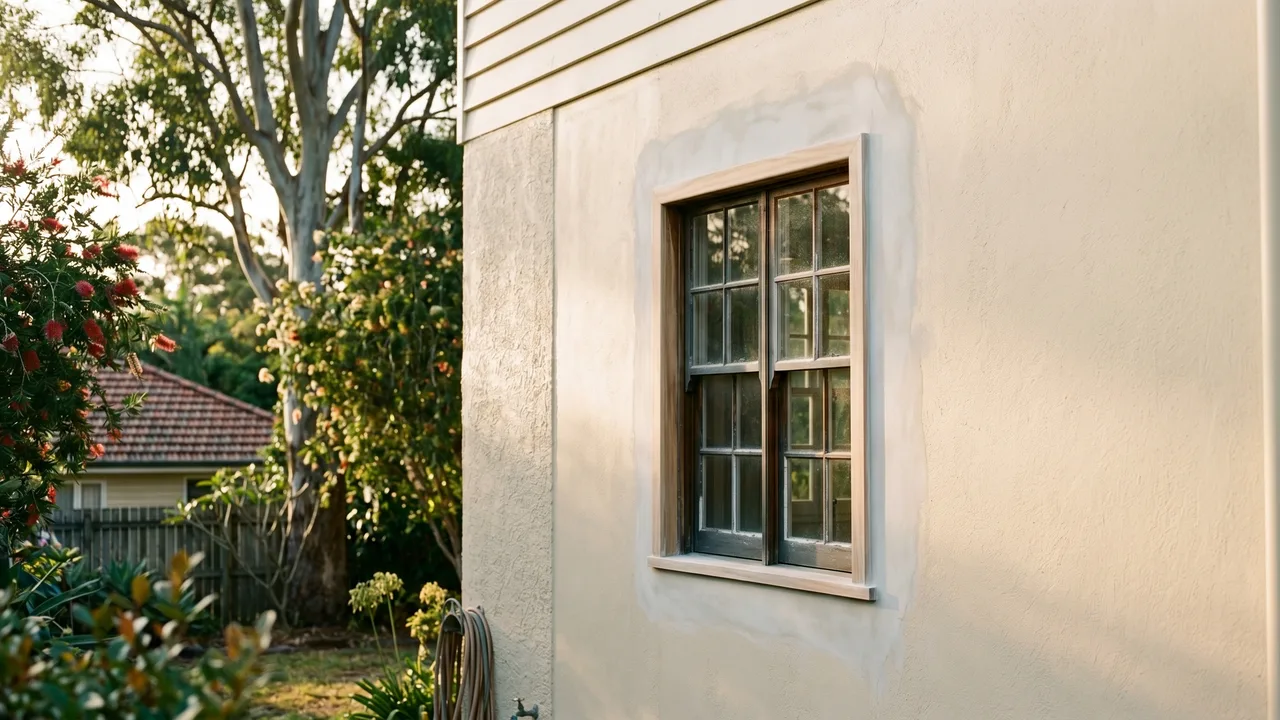
Painter guide
Why rendered walls in Brisbane suburbs need special prep before painting
Rendered walls need special prep before painting because the surface itself is porous, chemically active and prone to movement in ways that bare timber or brick simply aren't. Skip the prep and paint adhesion fails within a year or two. Do it properly and you can expect a quality exterior finish to last eight to twelve years in the Brisbane climate.
What "rendered" actually means, and why it matters
Render is a mortar-based coating applied over masonry, fibre cement or, on older homes, timber framing. It's typically a mix of sand, cement and sometimes lime. Some homes in the Belmont, Mount Gravatt and Wishart areas have older sand-and-cement render from the 1970s and 1980s. Newer builds more often use acrylic or polymer render, which behaves differently under paint.
The key point is this: render is not a sealed surface. It contains tiny pores and, depending on its age and mix, it can still be alkaline enough to attack certain coatings. It also shrinks and expands with temperature changes, which means cracks are almost inevitable over time, especially on walls facing west or north-west where the afternoon sun hammers them through summer.
Knowing which type of render you have changes what prep products you use and how long the job takes.
Alkalinity: the invisible enemy of fresh paint
Freshly applied cement render can have a pH above 12. That level of alkalinity will saponify (break down) oil-based paints and cause some acrylic topcoats to blister or lose adhesion. Even render that's a few years old can retain enough alkalinity to cause problems if moisture has been getting in.
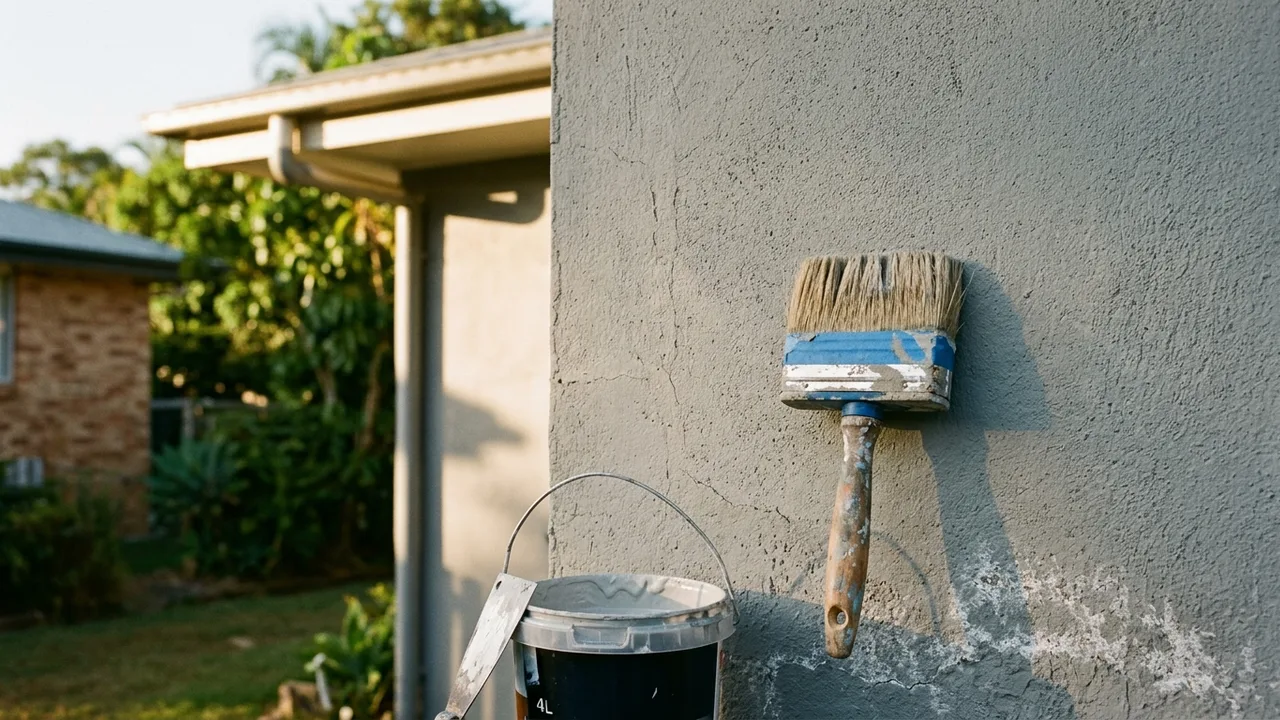
The practical test is simple. Wet a small patch and use pH indicator strips. Anything above pH 10 needs either more curing time or an alkali-resistant primer before topcoat. In practice, most Brisbane painters will use a masonry sealer or alkali-resistant primer on any cement render as a matter of course, whether the render is new or not.
If you're living in Carindale or Rochedale and your house was rendered as part of a renovation two or three months ago, it almost certainly hasn't fully cured yet. Rushing paint onto fresh render is one of the most common reasons exterior paint fails prematurely in this part of Brisbane.
Moisture, Brisbane weather and the timing question
Brisbane's humid subtropical climate creates a particular challenge. Render absorbs moisture readily, and painting over a damp surface traps that moisture beneath the film. The result is usually blistering or peeling within six to twelve months.
The practical rules are fairly consistent among experienced local painters:
- Wait at least 28 days after new render is applied before painting, and longer if it's been rainy.
- Paint in the cooler, drier months if possible. May through to August is generally the best window.
- Check morning moisture readings on exterior walls before painting. A simple moisture meter (under $50 at a hardware store) tells you more than guessing by touch.
- North-facing and west-facing walls in suburbs like Holland Park and Upper Mount Gravatt often dry out faster between rain events, but they also expand and contract more aggressively from the heat cycling.
There's no shortcut here. If moisture is present, you wait. Painting over damp render is money wasted.
Cracks, hollow spots and the temptation to just fill and go
Rendered walls crack. That's normal. The problem is treating all cracks the same way.
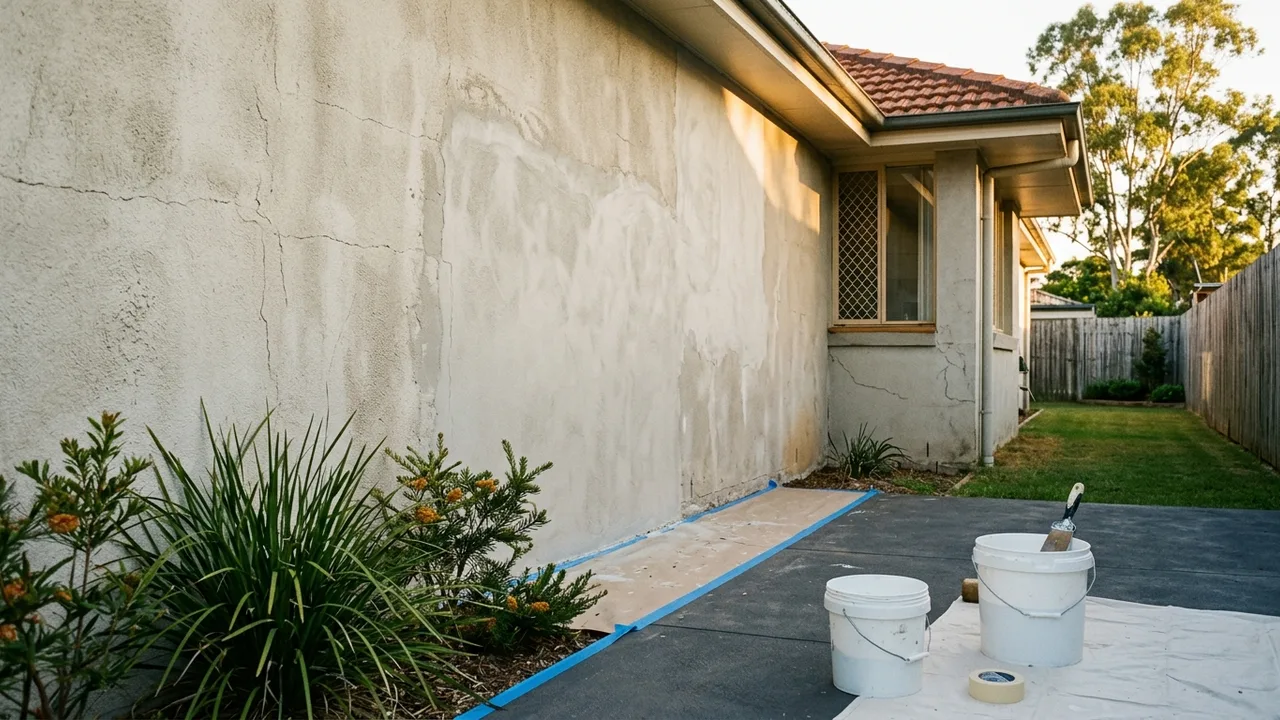
Hairline cracks (under 1 mm wide) are usually surface shrinkage. A flexible exterior filler or a good quality crack-bridging topcoat handles these adequately. Larger cracks (2 mm or more) need to be cut out slightly with an angle grinder or cold chisel, filled with a flexible exterior render patching compound, allowed to cure, primed, and then painted. Filling a wide crack with standard interior filler is a false economy. It moves with the wall, pops, and you're back to square one within a season.
Hollow render is a more serious issue. Tap across the surface with your knuckle. A hollow thud means the render has delaminated from the substrate behind it. Painting over hollow render will trap moisture and eventually cause a section to fall away. In older homes in Carina or Mount Gravatt East, hollow spots are not unusual and should be cut out, rebonded or re-rendered before any paint touches the wall. This adds cost, but it's the only way to get a finish that lasts.
The trade-off here is real: a proper crack and hollow repair might add $300 to $800 to a job, but it's the difference between a result that holds for a decade and one that looks shabby within two or three years.
Cleaning and surface profile: what actually sticks paint
Clean render holds paint. Dirty, chalky or mould-covered render doesn't.
In Brisbane's climate, rendered walls often develop mould, lichen or algae, particularly on south-facing walls or shaded areas in suburbs with established tree cover like Holland Park West or Wishart. These need to be treated with a fungicidal wash and pressure cleaned before any priming begins. Just pressure cleaning without a biocide treatment often doesn't kill the spores. They come back under the new paint film.
Chalking is another issue on older painted render. Run your hand across a surface that hasn't been painted in a while. If it comes away with a powdery white residue, the old paint has broken down and that chalky layer will prevent new paint from bonding. A thorough wash, and sometimes a light sand or sugar-soap treatment, removes the chalk. Some painters apply a penetrating sealer at this stage to consolidate the surface.
The surface profile also matters. Very smooth, dense render can be too non-porous for paint to grip. Light sanding or a bonding primer helps here.
Choosing the right primer for rendered walls
The primer step is where a lot of DIY paint jobs go wrong. Render needs a primer specifically rated for masonry or cement surfaces. A standard interior PVA primer, or the "all-purpose" primers sold at big-box stores, typically aren't formulated for the alkalinity or porosity of exterior render.
For most Belmont and surrounding area homes, an acrylic masonry primer is the standard starting point. On highly porous or fresh render, a diluted first coat (sometimes called a "mist coat") helps the primer penetrate rather than sit on top. On render with moisture or alkalinity concerns, an alkali-resistant primer is worth the extra $20 to $30 per litre. On smooth, dense render, a bonding primer is often the better choice.
Getting the primer selection wrong adds cost later because you're repainting sooner. Getting it right is a small upfront investment that protects everything above it.
A straightforward recommendation
If you're looking at your rendered walls and thinking the paint looks tired, don't just buy a tin and start rolling. Walk the perimeter first. Look for cracks wider than a hairline, tap for hollow spots, check for mould or lichen, and consider when the render was last painted or if it's relatively new.
For most suburban homes in the Belmont to Carindale corridor, a proper exterior render prep and repaint sits somewhere between $2,500 and $7,000 depending on wall area, the extent of crack repairs, and access requirements. That's a reasonable range, not a number to quote to a tradie, but a useful benchmark for knowing whether a quote seems reasonable.
If you're unsure about the condition of your render, the most useful thing you can do is get a local painter to walk around the house with you before you commit to anything. A good painter will tell you what needs fixing and what doesn't, without padding the job. That conversation costs nothing and often saves you from an expensive mistake.
If you'd like to connect with a local painter who works across Belmont, Carindale, Mount Gravatt and the surrounding suburbs, we can help with that.
Quick answers