Painter guide
Is roof painting actually worth it for a tiled Brisbane home?
Is Roof Painting Worth It for a Tiled Brisbane Home?
For most tiled roofs in Brisbane, yes, roof painting is worth it — but only when the timing is right and the roof is in reasonable structural condition. If your tiles are cracked, heavily displaced, or the underlying sarking is shot, painting is money spent on cosmetics when the real problem is underneath.
That qualifier matters. Roof painting done at the wrong time, or on the wrong roof, is one of the more common ways homeowners in suburbs like Wishart, Mansfield and Mount Gravatt end up frustrated. So let's be specific about when it makes sense and when it doesn't.
What Roof Painting Actually Does (and Doesn't Do)
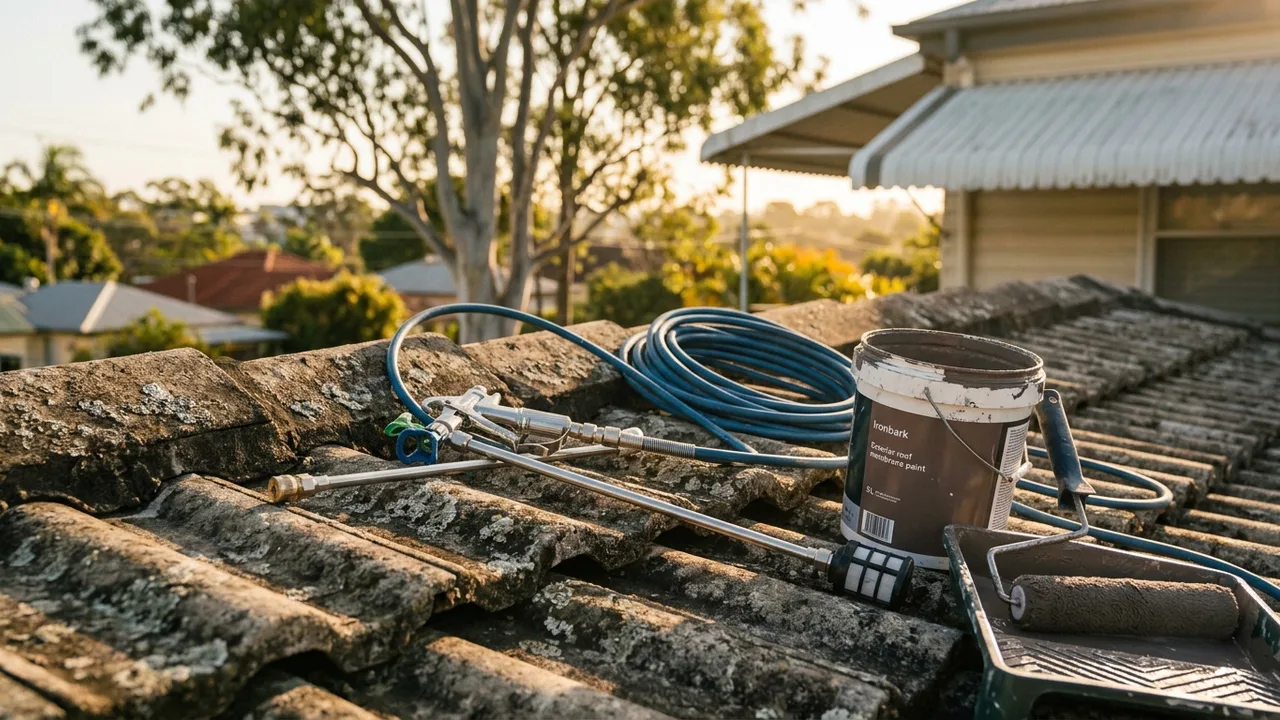
Concrete and terracotta tiles are porous. Over time, they absorb moisture, grow lichen and algae, and the factory colour fades to a chalky, blotchy finish. Roof paint addresses all three of those problems. A proper application, done after pressure washing and priming, seals the tile surface, kills residual organic growth, and restores a consistent colour.
What it does not do:
- Fix cracked or broken tiles (those need replacing before painting)
- Seal an active roof leak (the leak source has to be found and fixed first)
- Compensate for failed pointing or bedding mortar at the ridge line
- Make old tiles structurally new
The realistic lifespan of a quality roof paint job in Brisbane's climate is typically 10 to 15 years, depending on the product used, how well the surface was prepared, and how much shade the roof gets. A north-facing roof in Carindale that cops full Queensland sun every day will degrade faster than one with decent tree coverage in Belmont.
The Cost Versus the Alternatives
Roof painting on a standard three-bedroom Brisbane home typically runs somewhere between $2,500 and $5,500, depending on roof size, pitch, tile condition, and access. That range is a guide, not a fixed quote — a steep hip roof in Upper Mount Gravatt with a lot of ridge work costs more to prep and paint than a low-pitch gable in Carina.
Now compare that to the alternatives:
Full retiling. Replacing a concrete tile roof on a similar-sized home often starts at $15,000 and can push well past $25,000 depending on the scope. For a structurally sound roof that's just aged in appearance, that's a significant overspend.
Do nothing. This is a legitimate choice if the tiles are sound and you're not selling, not renting, and the growth hasn't become excessive. Unpainted concrete tiles don't automatically fail. But lichen and algae do hold moisture against the tile surface, and over years that does accelerate wear. It's a slow process, not an emergency.
Roof cleaning only. A professional pressure wash and moss treatment, without painting, typically costs $400 to $900 and restores appearance reasonably well on tiles that still have decent colour. If your tiles are structurally fine and the colour is acceptable, this is the honest alternative to painting. It won't last as long visually, but it's significantly cheaper and still addresses the organic growth problem.
The honest trade-off: if your tiles are faded past the point where cleaning alone will restore them, and the structure is sound, painting delivers real value. If the tiles look fine after a clean, skip the paint and save the money.
Brisbane's Climate and What It Does to Tile Roofs
Brisbane's subtropical climate is genuinely hard on roofing. The combination of UV intensity, high humidity, and those sudden heavy downpours from November through March creates conditions that accelerate tile fade and organic growth.
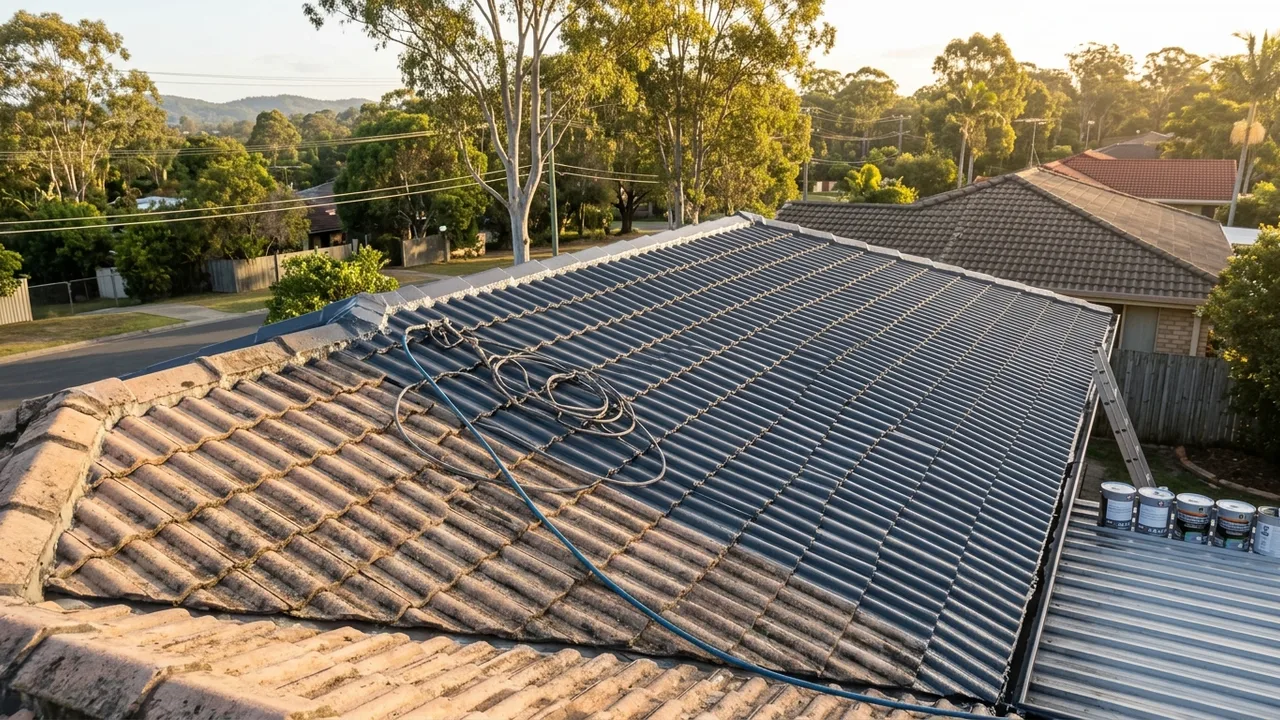
In suburbs like Wakerley and Rochedale where tree canopy is thicker, moss and lichen growth tends to be more persistent because of the shade and moisture retention. In more exposed positions, like open ridgelines in Holland Park or Upper Mount Gravatt, UV degradation of the tile colour tends to be the dominant issue rather than biological growth.
Jacaranda and other large deciduous trees, common through the Inner South and Outer East of Brisbane, drop organic material onto roofs through autumn that feeds lichen if it's left to sit. This is worth factoring in when you're assessing your own roof.
Salt air is less of a factor for suburbs in this part of Brisbane. That's more relevant for bayside and coastal properties. For Belmont, Mount Gravatt East, Holland Park West and surrounds, the primary concerns are UV, moisture, and biological growth rather than salt-driven corrosion.
How to Tell If Your Roof Is a Good Candidate
Get onto Google Maps and use the satellite view as a starting point. If you can see significant colour variation, dark streaking, or obvious green patches, that's a roof worth having looked at properly.
From ground level, look for:
- Faded, chalky, or blotchy tile colour across most of the roof face
- Dark streaks or green patches (algae and lichen, not just shadow)
- White or orange deposits on tiles (efflorescence or biological growth)
- Visible cracks in individual tiles, or broken tiles sitting out of alignment
If you spot cracked or broken tiles before you call anyone, flag that specifically. A roof painter needs to know whether tile repairs are part of the scope, because that affects prep and cost. In many cases, replacing a handful of damaged tiles before painting makes the whole job worthwhile. Painting over cracked tiles without addressing them first is a short cut that will show up later.
Also look at the ridge capping. If the pointing (the mortar that holds the ridge tiles) is cracking and crumbling, that's a separate repair that should happen before painting. Some painting crews handle this; others don't. Worth confirming the scope upfront.
The Preparation Question — Where Most Jobs Go Wrong
The biggest variable in whether a roof painting job holds up over time is surface preparation, not the paint brand. A high-quality acrylic roof paint applied over a poorly cleaned or unprimed surface will peel within a few years. A standard product applied to a properly prepared surface will last considerably longer.
The correct sequence for a tiled roof repaint is:
- Pressure wash to remove dirt, lichen, moss and loose material
- Allow adequate drying time (at least 24 to 48 hours in Brisbane conditions, longer in cooler months)
- Replace cracked tiles and re-point ridge capping where needed
- Apply a penetrating sealer or primer coat to bare or porous tiles
- Apply two coats of roof membrane or acrylic roof paint
If someone quotes you significantly below the typical range and mentions they'll knock it over in a single day, ask specific questions about their prep process. The prep work on an average Brisbane home often takes longer than the painting itself.
The Honest Recommendation
If your tiled roof is structurally sound, the tiles are aged and faded, and you're planning to stay in the property for several more years (or you're preparing to sell and the roof visually lets down the rest of the house), roof painting is a sensible investment. It extends tile life, improves appearance, and costs a fraction of a retile.
If your tiles are in decent condition and cleaning would restore the appearance adequately, start there. You can always revisit painting in five years.
If there are structural issues, cracked or missing tiles, or active leaks, address those first. Painting over a compromised roof is a way to spend money twice.
For a specific read on your own roof in Belmont, Carindale, Holland Park or any of the surrounding suburbs, it's worth having someone up there for an assessment before you commit. Most roof painters will do an inspection and quote at no charge. Use that to ask direct questions about prep process and what exactly is included in the scope.
We connect homeowners in this part of Brisbane with local painters who know the area. If you'd like an introduction, that's what we're here for.
Quick answers